
Best Time to Visit Tunisia: A Seasonal Guide
Why Timing Matters in Tunisia
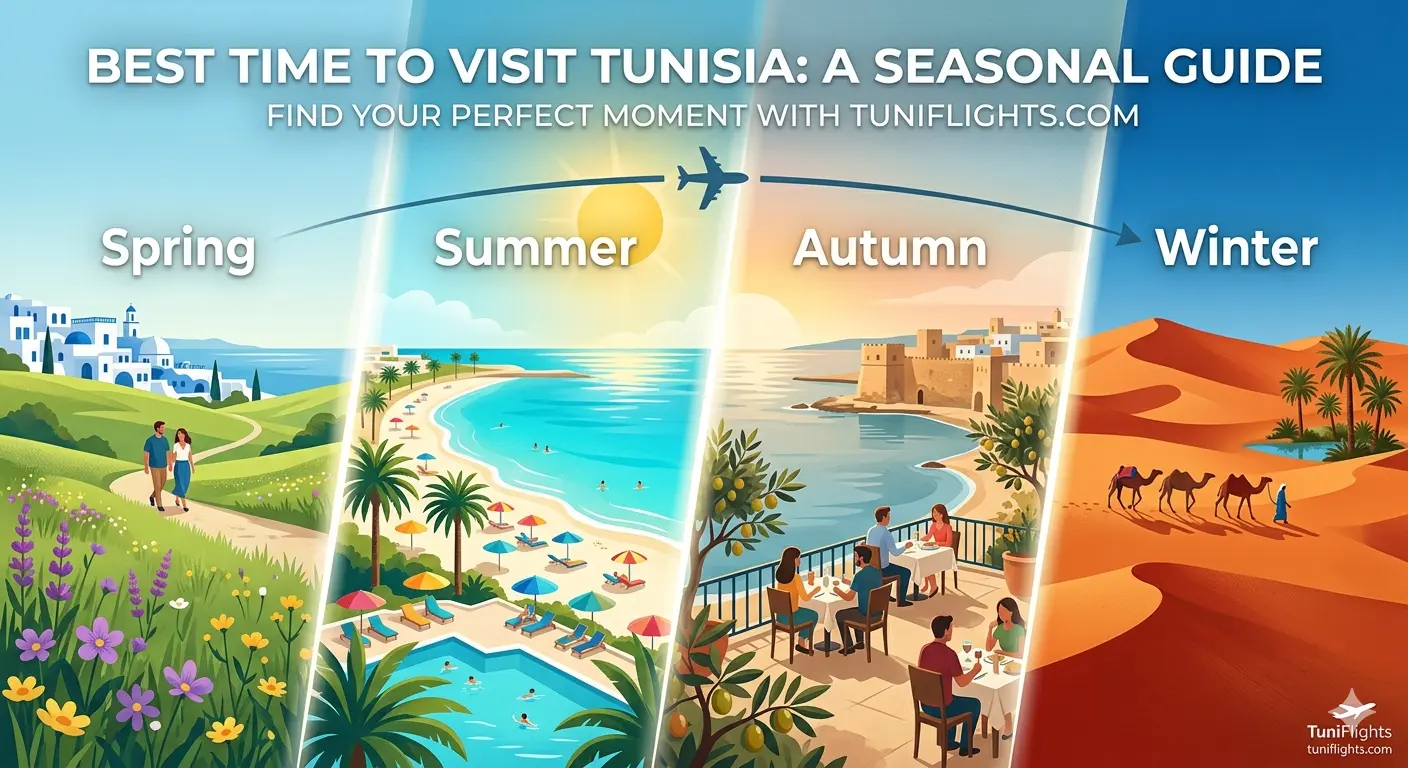
Tunisia is one of those destinations that changes character dramatically depending on the month. In spring, it feels like a relaxed cultural break with mild weather and green countryside. In high summer, it turns into a classic Mediterranean beach destination with hot days, lively resorts, and peak-season prices. In autumn, the sea stays warm while the crowds thin out. In winter, the coast remains relatively mild and the desert becomes much more comfortable for excursions.
That means there is no single best time for everyone. The right window depends on what kind of trip you want to take: a beach holiday, a city break, a road trip, a desert itinerary, or a budget-focused visit.
Spring (March to May)
Spring is the safest all-round recommendation for most travelers. Daytime temperatures are usually pleasant, flowers are in bloom in the north, and popular areas such as Tunis, Sidi Bou Said, Carthage, Kairouan, and the medina feel much easier to explore than they do in midsummer.
March can still feel fresh in the evenings, especially near the coast, so a light jacket is useful. By April and May, the weather is more consistently warm and many travelers find this the ideal balance between sightseeing comfort and good flight prices.
Spring works especially well if your plan includes:
• Walking-heavy city days in Tunis or Sousse
• Historical sites like Carthage, El Jem, and Dougga
• Road trips that combine the coast with inland stops
• Photography thanks to softer light and clearer skies
Summer (June to August)
Summer is peak season for beach destinations such as Djerba, Hammamet, Sousse, and Monastir. Resorts are fully open, beach clubs are active, family travel is at its highest, and direct flights are easiest to find. The trade-off is simple: you pay more and you deal with more heat.
July and August can be very hot, particularly away from the sea. If you are planning to spend most of your time by the pool or on the beach, that may be fine. If you want to walk through medinas at midday, visit ruins for hours, or move around inland towns, summer becomes much harder to enjoy.
If you travel in summer, plan around the climate:
• Sightsee early in the morning or later in the afternoon
• Book flights and hotels early, especially for school-holiday dates
• Prioritize coastal destinations over long inland daytime itineraries
• Expect the strongest demand on weekends and major holiday periods
Autumn (September to November)
Autumn is underrated and, for many repeat visitors, the smartest season of all. September still feels like summer by the sea, but prices and crowd levels often begin to soften. October is particularly attractive because the water can still be pleasant for swimming while sightseeing conditions improve significantly.
November is a transition month. Coastal city breaks still work well, but beach-only travelers may find the sea less appealing. The upside is that airfare can become much more competitive again, especially from European cities with regular direct service.
Autumn is a strong choice if you want:
• Warm-weather travel without peak-season pressure
• Better-value beach trips to Djerba or Hammamet
• Mixed itineraries that combine culture, food, and coast
• A realistic shot at strong deals from France, Germany, Italy, Switzerland, or Belgium
Winter (December to February)
Winter is not beach season, but it can still be excellent for the right type of traveler. The north and coast remain milder than much of Europe, making Tunisia attractive for short sun breaks, cultural weekends, and desert trips. Tunis, Sidi Bou Said, Kairouan, Tozeur, Douz, and the Sahara region are all much easier to explore when temperatures are moderate.
This is usually the cheapest period for flights outside major holiday spikes. You may find fewer resort services in some beach areas, but if your goal is value rather than poolside time, winter can be one of the best seasons to go.
Winter is especially good for:
• Cultural trips focused on history, food, and architecture
• Desert excursions where the daytime climate is more manageable
• Budget travel with lower airfares and cheaper accommodation
• Short breaks when you want a warmer alternative to northern Europe
Best Season by Trip Style
If you are unsure, match the season to the trip rather than trying to optimize for everything at once.
• Best for beaches: late June to September
• Best for sightseeing: March to May and October
• Best for desert trips: late autumn through early spring
• Best for budget flights: January to March and late autumn
• Best all-round balance: April, May, September, and October
How Flight Prices Usually Behave
Tunisia can produce very good fares from Europe, but the cheapest windows rarely line up with the most popular travel dates. Shoulder season is where value usually improves. Midweek departures, flexible return dates, and secondary airports can make a noticeable difference.
In general, you should expect:
• Higher prices in July, August, and holiday periods
• Better odds of deals in spring and autumn
• Excellent value windows in January to March if beach weather is not essential
• Fast-moving fares on popular routes to Tunis, Djerba, and Monastir
Practical Recommendation
If you are visiting Tunisia for the first time, choose either **April to May** or **September to October** unless you have a specific reason to travel in another season. Those windows offer the best balance of weather, flexibility, and price. If you are traveling mainly for the beach, summer still makes sense. If you care most about saving money and seeing more of the country, winter can be surprisingly rewarding.
Final Takeaway
The best time to visit Tunisia depends on whether you care most about sun, sightseeing comfort, or low prices. For most travelers, shoulder season wins. You avoid the most intense heat, you get more room to explore, and you often find much better value on flights and hotels.
If your dates are flexible, keep an eye on TuniFlights during late winter, spring, and autumn. Those are the periods when Tunisia often delivers the best mix of affordable airfare and genuinely enjoyable travel conditions.