
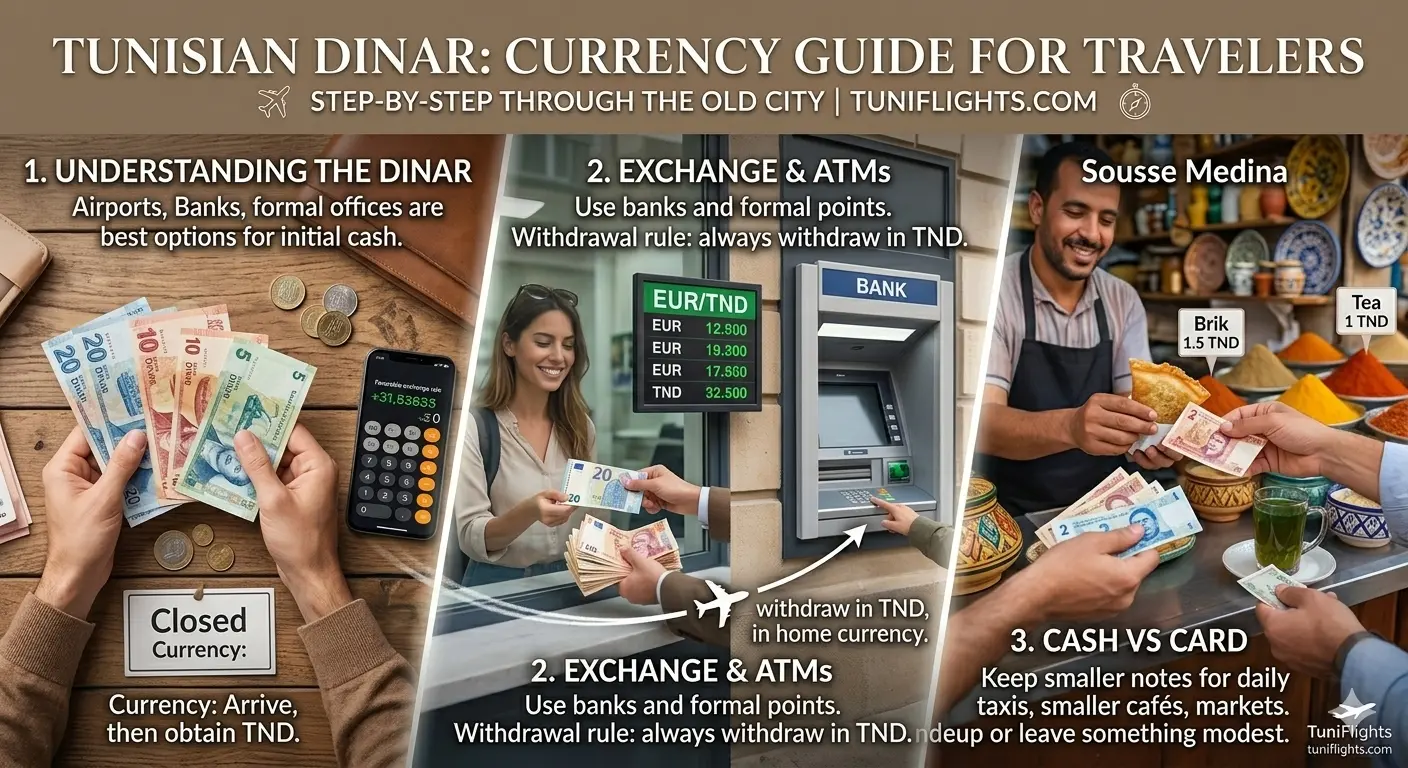
Tunisian Dinar: Currency Guide for Travelers
The First Thing to Know About Money in Tunisia
The Tunisian dinar is not just another holiday currency. It is a closed currency, which means you generally cannot buy it in advance outside Tunisia the way you might with euros, dollars, or pounds for another trip. For most travelers, the practical money plan starts on arrival.
Understanding the Dinar
Prices in Tunisia can feel very favorable to travelers arriving from Europe, but that does not mean you should stop paying attention to exchange conditions. A poor rate, hotel exchange, or dynamic currency conversion can eat into the value quickly.
The dinar is usually written as **TND**. You will see prices in dinars and millimes, and small daily purchases add up more comfortably when you carry a mix of small and medium notes.
Where to Exchange Money
Your best options are usually airport exchange offices, banks, or formal exchange points. Airports are convenient and often good enough for an initial amount, especially if you only need money for transport, water, and your first meals.
In general:
• Airport exchange counters are useful for your first cash
• Banks and formal exchange offices are usually the safer long-term option
• Hotels are convenient but often weaker on rates
• Informal street exchange is not worth the risk
Using ATMs in Tunisia
ATMs are common in cities and tourist areas, and many travelers rely on them for most of their trip. The practical rule is simple: withdraw in **TND**, not in your home currency, if the machine offers a choice. That helps avoid unnecessary conversion costs.
ATM habits that usually help:
- Bring at least **two payment cards** if possible
- Notify your bank if your card is sensitive to travel fraud flags
- Avoid arriving late at night with no cash backup at all
- Use ATMs attached to banks when possible
Cash vs Card
Tunisia is still a country where cash matters. Hotels, larger restaurants, and some tourism businesses may accept cards, but taxis, smaller cafés, local shops, markets, and many day-to-day purchases are easier with cash.
The practical balance is to use cards where they are straightforward and keep enough cash for daily movement.
Typical Prices Travelers Should Expect
Tunisia can be excellent value, but budget expectations depend on how local or tourist-focused your day is. Coffee, simple food, taxis, and everyday items are usually affordable. Imported goods, upscale hotel zones, and tourist shopping can push costs higher than expected.
A few categories to watch:
• Coffee and snacks stay inexpensive
• Local restaurant meals are usually good value
• Short taxi rides are often affordable if priced properly
• Museum tickets and basic attractions are usually manageable
• Tourist retail is where overpaying becomes easiest
Tips, Small Notes, and Everyday Spending
Carry smaller notes whenever possible. They are useful for taxis, cafés, market purchases, and small service tips. Even when the total amount is small, exact change can make everyday transactions smoother.
Tipping is not always mandatory in a rigid way, but rounding up or leaving something modest in restaurants and for helpful service is common and appreciated.
Mistakes to Avoid
Travelers usually lose money in predictable ways.
Avoid:
• Accepting poor hotel exchange rates without checking alternatives
• Paying in euros where the seller prefers it but gives a weak rate
• Using large notes for tiny purchases when smaller cash is available
• Withdrawing in your home currency instead of dinars
Before You Leave Tunisia
Because the dinar is a closed currency, leftover cash matters. Keep your exchange receipts if you may want to convert unused dinars before departure. Do not wait until the very last minute at the airport if the amount is significant.
Final Takeaway
Money in Tunisia is easy to manage if you understand three basic rules: arrive ready to obtain dinars locally, use cash more often than you might in Europe, and avoid lazy conversion choices.
Do that, and Tunisia remains one of the more comfortable destinations for travelers who want strong value without constantly calculating every small purchase.